
TikTok Audience Insights Generator
December 13, 2025Tiktok algorithm update for December 2025
December 16, 2025Table of Contents
- Unlock the Power of TikTok Hashtags: Introducing the Ultimate Analyzer
- How the TikTok Hashtag Analyzer Works: Features, Benefits, and Real-World Results
- The Complete Guide to TikTok Hashtag Strategy: Best Practices for Maximum Visibility
- Step-by-Step: Using the TikTok Hashtag Analyzer for Your Next Viral Post
- Frequently Asked Questions: TikTok Hashtag Analyzer and Hashtag Optimization
- Take Your TikTok Growth to the Next Level: Start Analyzing Hashtags Now
Turn guesswork into growth. Discover the right hashtags for your audience using real data.
- Analyze Hashtags
- Learn the Strategy
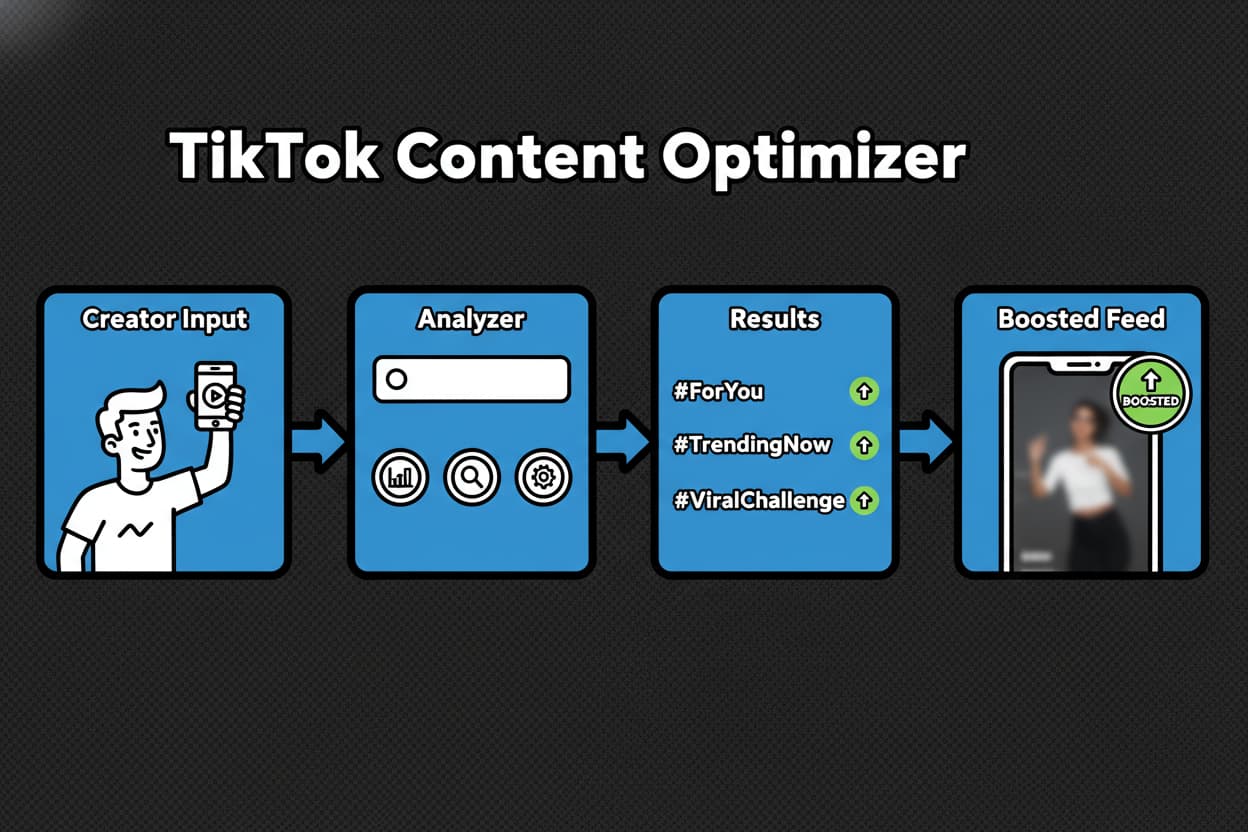
Unlock the Power of TikTok Hashtags: Introducing the Ultimate Analyzer
You post a banger. The hook is tight, edits are clean, and the story lands. Then the views stall at 1,200 and your comments are crickets.
Sound familiar? You’re not alone.
TikTok is massive. TikTok reports it surpassed 1 billion monthly active users, which means your content competes with countless posts for attention across For You and Search surfaces. Source: newsroom.tiktok.com
Hashtags help TikTok understand what your video is about and who should see it. They influence searchability, topic matching, and the discovery context your post lands in. The right tags can be the difference between your clip being seen by the right viewers or getting buried in the feed.
But picking hashtags by gut is exhausting. You’ve probably felt at least one of these:
- Guessing which tags work, then hoping for the best
- Chasing generic trends like #fyp and getting inconsistent results
- Spamming too many tags and diluting relevance
- Copying competitors without knowing why their tags perform
Here’s the fix: stop guessing. Start using a TikTok hashtag tool that gives you real, data-backed recommendations.
Our tiktok hashtag analyzer turns your topic into actionable hashtag insights. You’ll see how popular a tag is, how competitive it looks, how relevant it is to your content, and whether it’s rising. That means you can choose an optimal mix with confidence, not vibes.
Who is this for? Creators, social media managers, influencers, small business owners, and anyone who wants consistent reach. If you care about discoverability and want a repeatable system to optimize TikTok hashtags, you’re in the right place.
A quick story. Maya, a skincare creator, was stuck around 1,000 to 1,500 views per post. She used generic tags and got sporadic spikes. After running her topic through the analyzer and choosing a balanced mix of broad, niche, and branded tags, her next batch of posts found the right sub-communities. Watch-through rose, and comments got specific. People who needed that routine actually found it.
You don’t need to be lucky. You need data.
- Analyze Hashtags
How the TikTok Hashtag Analyzer Works: Features, Benefits, and Real-World Results
You bring the content idea. The analyzer brings the clarity. Here’s the flow from input to results, so you know exactly what to expect.
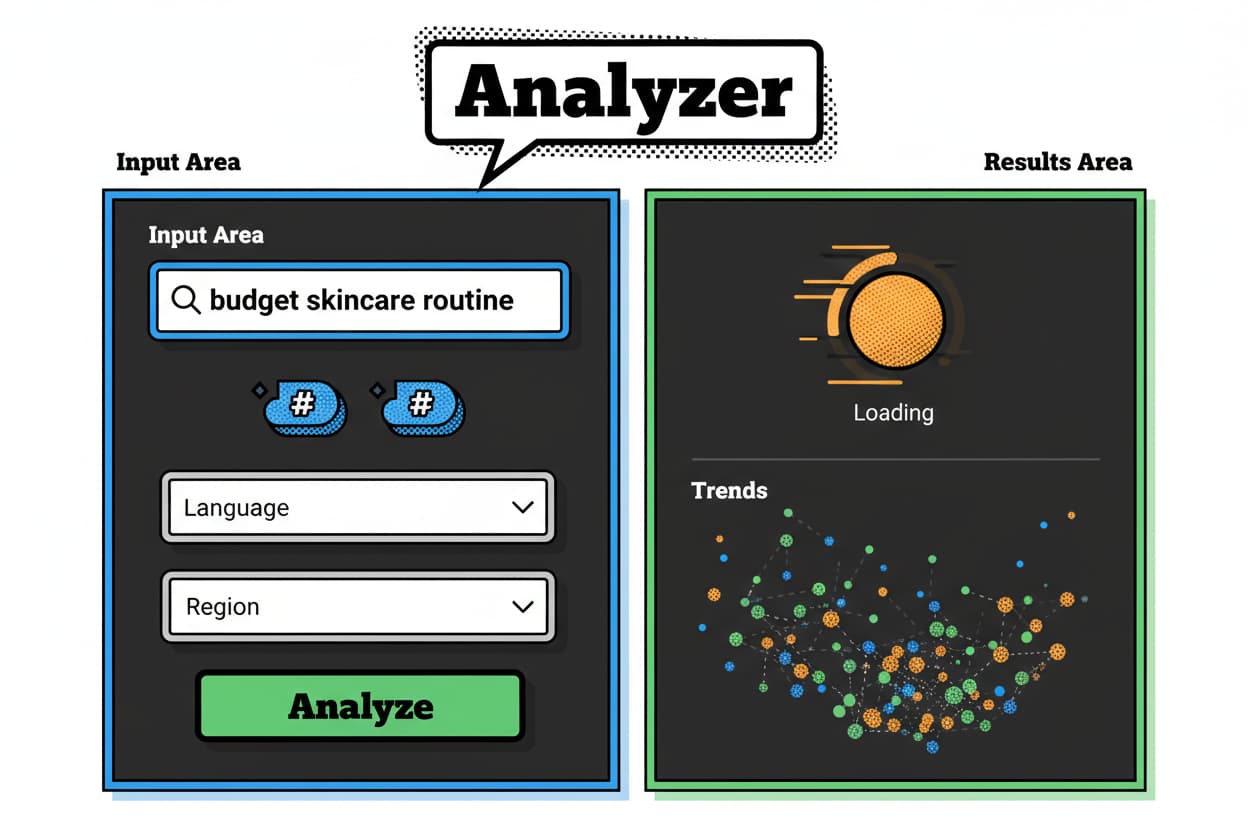
Start by entering your topic or a few seed hashtags. Examples: “budget skincare routine”, “beginner salsa footwork”, “latte art tutorial”. Pick language and region to tailor discovery to your audience. Then hit Analyze.
The engine maps your topic to a set of candidate hashtags using semantic matching and public trend signals. It estimates how popular each tag is, how competitive it looks, how relevant it is to your content, and whether it’s accelerating or fading. You get a sortable, filterable dashboard plus a one-click suggested set.
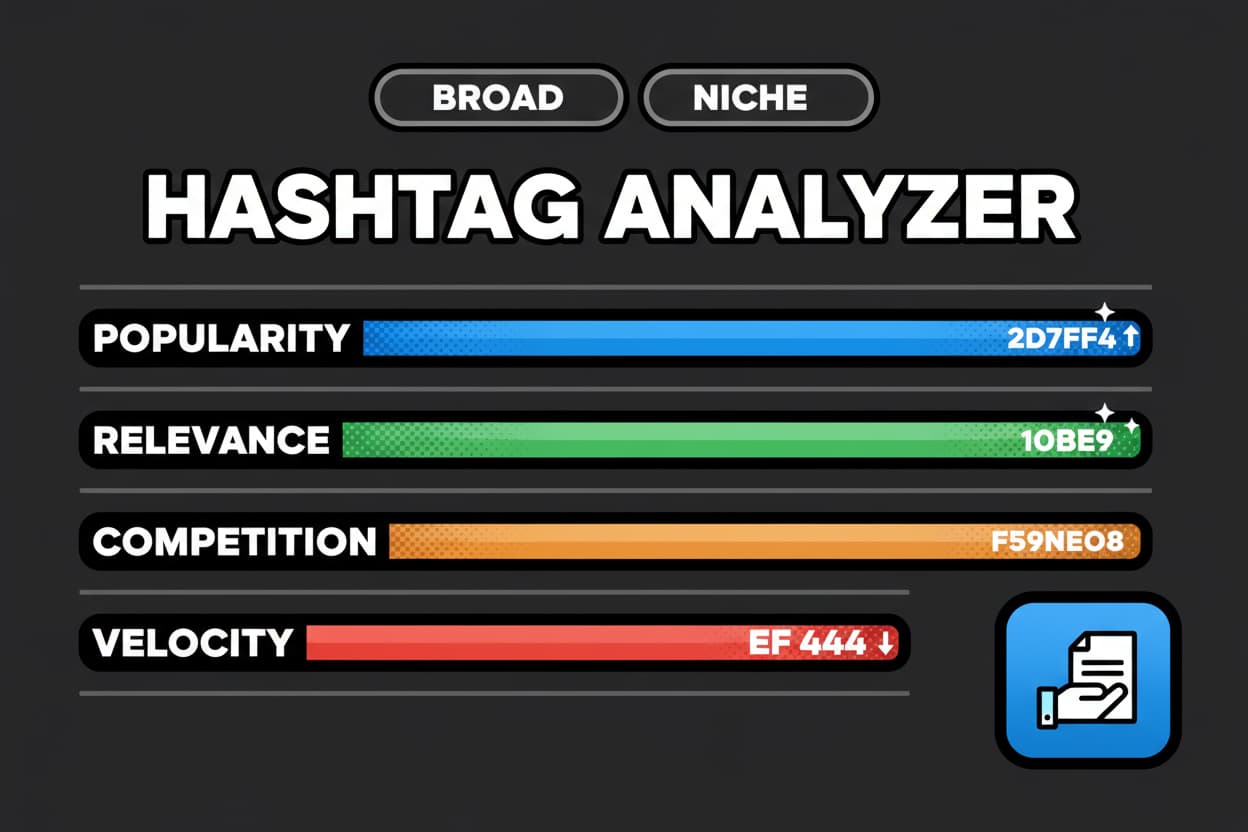
Understand the core metrics
Clarity beats complexity. We use four core metrics you can scan in seconds and trust for decision-making.
Popularity score (0-100). A relative estimate of overall attention on the hashtag. Higher means the tag draws more eyeballs. Great for reach, but often attracts heavy competition.
Competition ratio. A relative indicator of how saturated the tag is. Lower can mean a better chance to stand out within that hashtag’s stream. Balance matters more than chasing the absolute lowest.
Relevance score (0-100). How closely the tag matches your topic, based on semantic similarity. Higher relevance helps TikTok understand your content and show it to the right viewers.
Trend velocity. Negative, steady, or rising, with a slope indicator. Rising tags can be great when relevance is strong and competition is moderate. Negative velocity means interest may be cooling.
Explore features that speed up your workflow
Hashtag clusters. We categorize candidates into broad, niche, and branded clusters so you can build a smart mix fast.
Alternatives and lookalikes. If a tag is too competitive or not relevant enough, you’ll see similar options with better balance.
Filters. Slice by Broad, Niche, Branded. Sort by Popularity, Relevance, Competition, or Velocity. Pin favorites to compare side by side.
Banned or low-quality warnings. The analyzer flags known low-quality or misleading tags. Skip spammy tags that might hurt discovery.
Saved sets. Save your best mixes for future posts. Pin a set per content series and reuse with small tweaks.
Export and copy. Copy your set in one click or export to CSV. Share with your team or paste right into your caption.
Choose an optimal mix
A winning set usually blends reach and precision. Here’s a clear rule of thumb you can apply on every post: pick 1 to 2 broad tags for discoverability, 3 to 5 niche tags for intent and community fit, and 1 to 2 branded tags to build recognition.
Scan the Popularity score for your broad tags, but don’t let Competition ratio get out of hand. For niche tags, prioritize Relevance score and look for steady or rising velocity. For branded tags, choose your channel tag or campaign tag, and keep it consistent.
Keep it tight and topical. Every tag should reinforce what your video is about and who it helps. If a tag adds noise instead of clarity, drop it.
See the kind of change you can expect
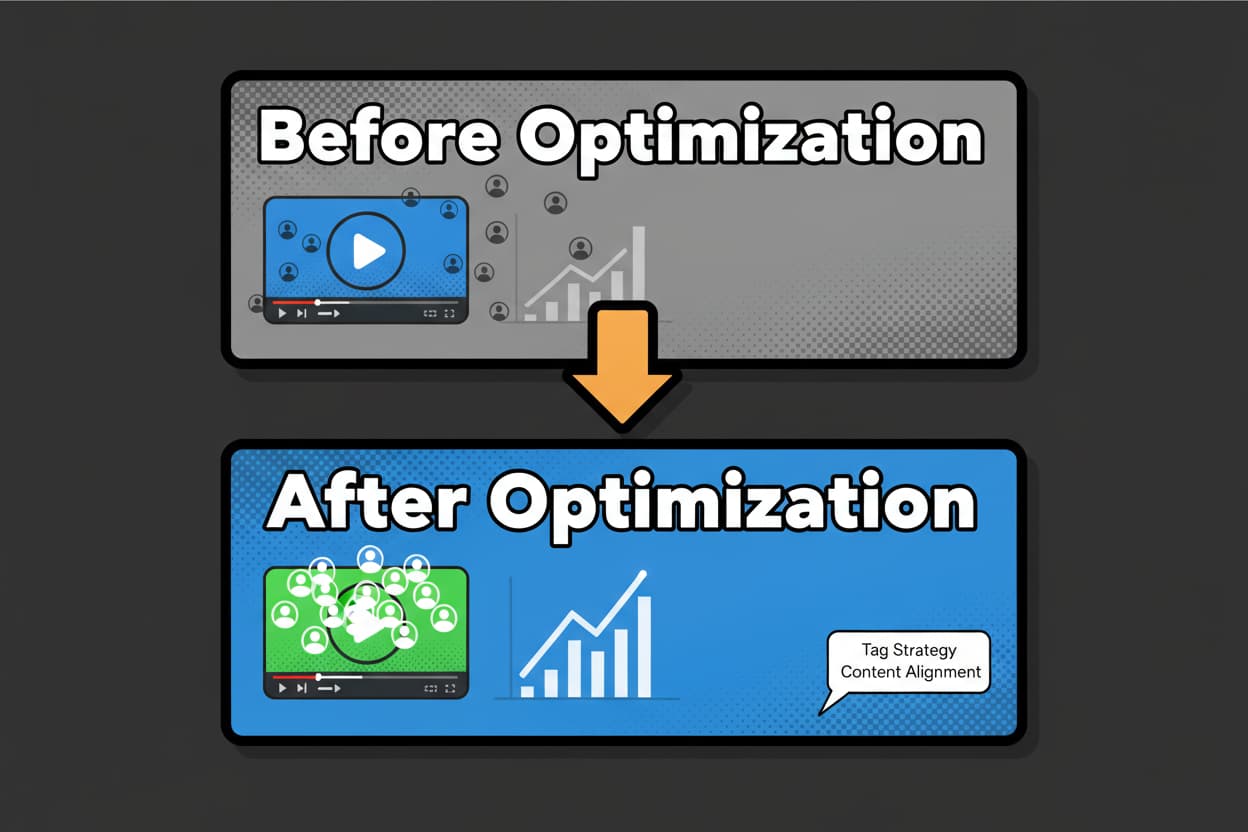
The example above is illustrative. No tool can guarantee results. What we consistently see in practice: a balanced, relevant mix improves audience matching. That often lifts watch-through, saves, and comments, which in turn helps the For You feed push your video to more people.
Quick answer: How do I analyze TikTok hashtags?
- Enter your topic or seed tags into a tiktok hashtag analyzer
- Review Popularity, Relevance, Competition, and Trend velocity for candidates
- Select a balanced mix: 1-2 broad, 3-5 niche, 1-2 branded
- Post, then track views, watch time, and comments
- Iterate on the mix across 3-5 posts to lock in what works
Analyze your tags now.
Results are estimates. Test over 3-5 posts for best signal. We don’t use or imply any official TikTok integration. Scores reflect modeled insights from public signals and your inputs.
The Complete Guide to TikTok Hashtag Strategy: Best Practices for Maximum Visibility
Hashtags do two jobs at once. They tell TikTok what your video is about, and they hint at who will care. That helps the system place your content in the right discovery context across For You, Search, and topic hubs.
When your tags match your topic and audience, the platform can test your video with people who are primed to watch. Better matching leads to better watch-through. Better watch-through often leads to more reach. That feedback loop is why TikTok hashtag optimization matters.
Let’s make this practical and repeatable.
The three types of hashtags you need to know
Trending. These are high-popularity tags with a rising trend velocity. They can add reach when they’re relevant to your content. Overuse or weak relevance can hurt more than help.
Niche. These tags reflect specific topics, subcultures, or problems. Think #dryskinroutine, #beginnerhiphop, #espressochannel. Niche tags boost precision and help your content reach the people who will watch to the end.
Branded. Your channel tag or campaign tag. Branded tags make your content recognizable and group your series. They won’t carry reach by themselves, but they’re key for consistency and community building.
Build smarter with the Hashtag Pyramid framework
The Hashtag Pyramid keeps your mix balanced without overthinking every post. Start with 1 to 2 broad tags at the top for reach. Add 3 to 5 niche tags in the middle for intent and community match. Anchor with 1 to 2 branded tags at the base for identity and series continuity.
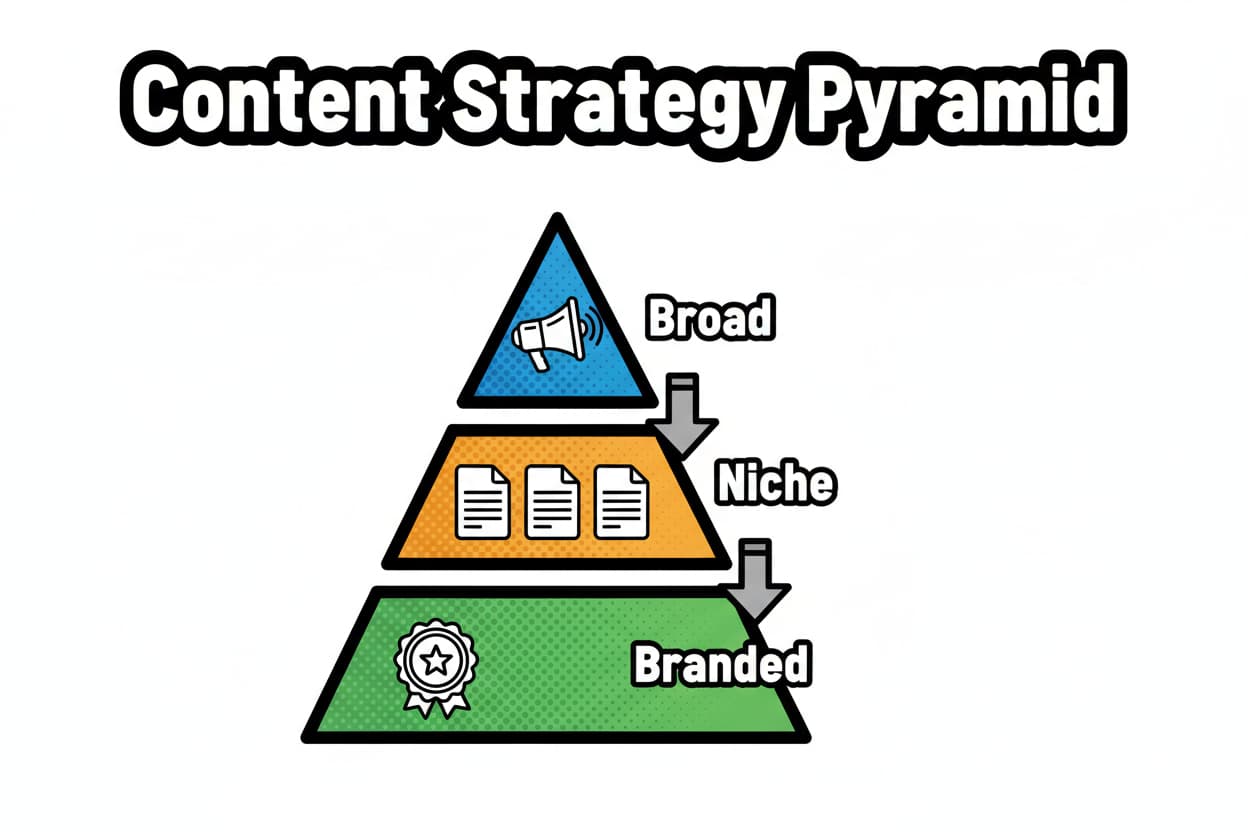
Here’s why it works. Broad tags give you a shot at scale, but they’re crowded. Niche tags concentrate your relevance, which improves watch-through and comments. Branded tags stabilize your identity so fans find the rest of your content.
Aim for 5 to 9 total tags. Your exact count depends on the video and the niche, but quality beats quantity every time.
Sample hashtag sets that just make sense
Dance. If your post is a beginner-friendly routine, your broad could be #dance or #learnwithme. Your niche might include #beginnersalsa, #basicsteps, #salsapractice, #danceclassathome. Your branded tag could be #StudioName or #CreatorName.
Education. Teaching Notion templates? Broad might be #productivity or #learnontiktok. Niche could include #notiontips, #notiontemplate, #workflowsimplified, #studyskills. Branded can be #YourBrand or #YourSeriesName.
Small Business. Showcasing packing orders? Broad could be #smallbusiness or #entrepreneur. Niche might include #packorderswithme, #etsyshop, #handmadebusiness, #shippingday. Branded stays consistent, like #ShopName or #FounderName.
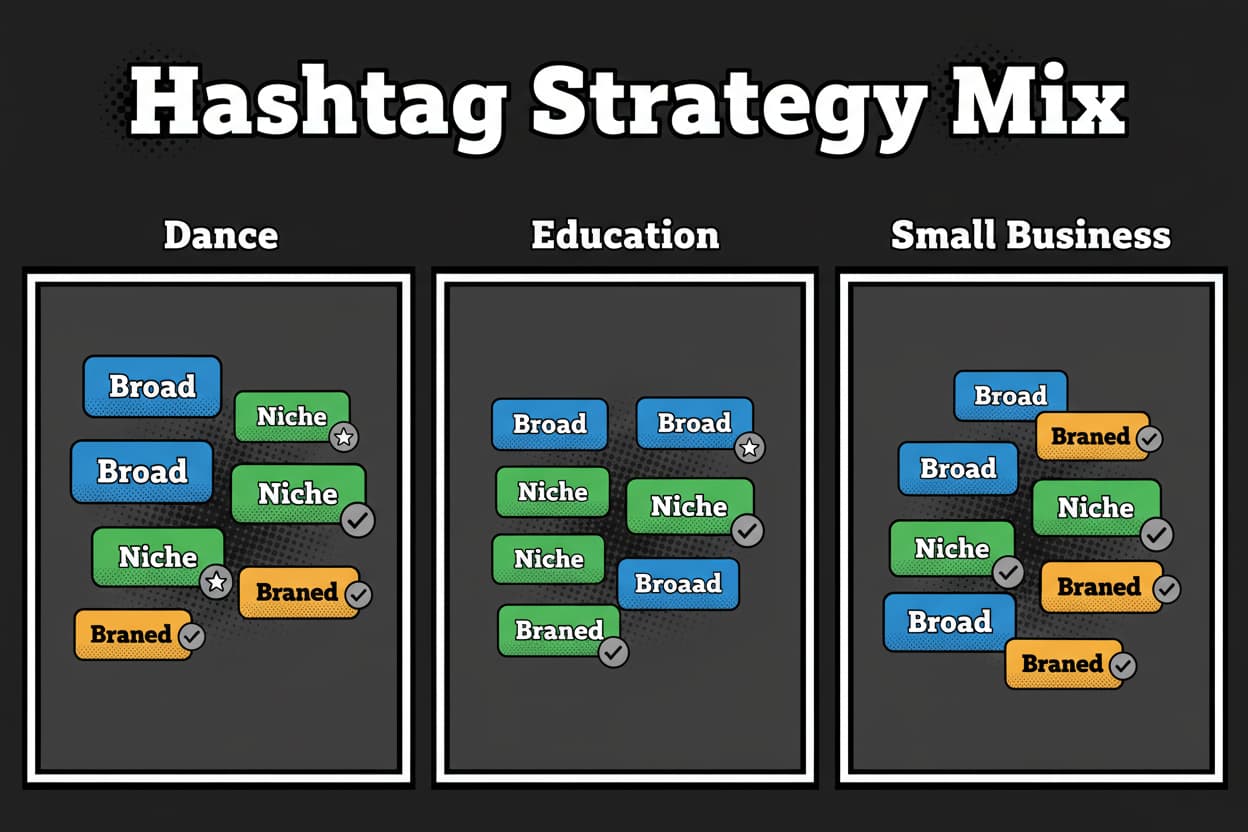
You’ll notice two things in the sets above. Every tag matches the actual content. And the mix leans into niche tags that your ideal viewer would search for or follow.
Avoid these common mistakes
- Relying only on generic tags like #fyp or #viral
- Adding tags that don’t match your video to chase reach
- Stuffing too many tags and diluting your topic signal
- Ignoring analytics and repeating the same weak mix
A small tweak here goes a long way. If you change just two tags from generic to niche and relevant, you often see stronger completion rates and better comments. That’s the discovery loop doing its job.
Mini-case: from broad-only to balanced
An education creator posted study hacks with #fyp, #viral, and #study. Views were inconsistent, and the audience was random. They ran the analyzer on “active recall method” and discovered better options. Broad: #learnontiktok. Niche: #activeRecall, #studywithme, #notestaking, #revisiontips. Branded: #CreatorName.
They posted three videos with this balanced mix and kept the same hook and structure. Watch-through improved. Saves went up. Search impressions increased for “active recall” and related terms. The content didn’t change, but the audience match did.
Results are estimates. Test over 3-5 posts for best signal.
Make the algorithm your ally
You don’t have to game the system. You just need to give it a clear topic and a clear audience. That’s what a data-driven tiktok hashtag tool does for you. It shows TikTok hashtag analytics in plain English and helps you pick tags that boost relevance without sacrificing reach.
Next, we’ll walk through the exact steps to use the analyzer for your next post. You’ll see how to prepare your content, run the analysis, choose your set, and track what actually works. This is where strategy turns into a simple, repeatable routine that fits your workflow.
- Learn the Strategy
Step-by-Step: Using the TikTok Hashtag Analyzer for Your Next Viral Post
You’ve got the strategy. Now let’s turn it into a simple workflow you can run in minutes. Here’s how to use the tiktok hashtag analyzer to go from idea to optimized tags every time.
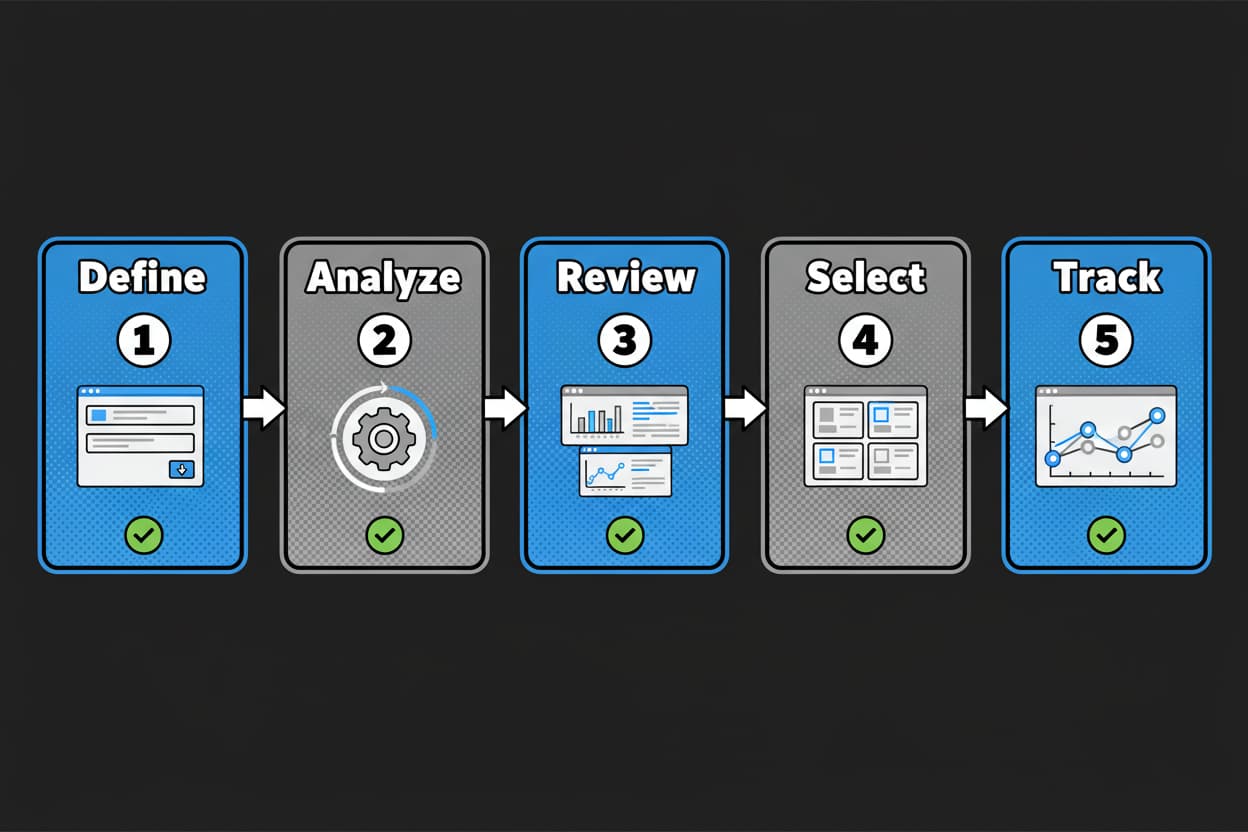
Start by clarifying your video’s topic and audience intent. What is your video about in 3 to 6 words? Who is it for? If your topic is “budget skincare routine for dry skin,” your audience intent is learning how to care for dry skin with affordable products.
Enter your topic and any seed hashtags into the analyzer. Add language and region to match your audience’s location. Hit Analyze. The tool will surface candidates across broad, niche, and branded clusters.
Review the four core metrics. Scan Popularity for reach potential, Relevance for topic match, Competition for saturation, and Trend velocity for momentum. Rising velocity plus strong Relevance is a good sign, especially when Competition is moderate.
Shortlist 15 to 25 candidates. Pin any tag that looks relevant and promising. This is your testing pool. Drop anything that feels off-topic or spammy. Keep the list tight to your theme.
Select your final mix using the Hashtag Pyramid. Choose 1 to 2 broad tags for discoverability, 3 to 5 niche tags for precision, and 1 to 2 branded tags for identity. Aim for 5 to 9 total tags, all directly related to the content in your video.
Post with confidence. Your tags should strengthen the topic signal and help TikTok match your video with the right viewers. Keep your hook and first 3 seconds tight. Hashtags get you in front of people; your content keeps them.
Track performance and iterate across 3 to 5 posts. Don’t judge a mix based on a single upload. Patterns show up over a small series.
Here’s a concise checklist you can reuse:
- Define topic and audience intent clearly
- Shortlist 15 to 25 relevant candidate tags
- Pick 1-2 broad, 3-5 niche, 1-2 branded
- Post and record views, watch time, CTR, saves
- Retest and refresh underperforming tags weekly
What should you measure? Start with views and average watch time. Add CTR from For You feed if available, plus saves and shares. Saves and longer watch times are strong signals that your audience-match is improving.
Compare mixes by theme rather than single posts. For example, run three videos with Set A and three with Set B. Keep the content format similar so the hashtag mix is the main variable.
Refresh tags on a regular cadence. Trending and niche tags shift, so retest weekly or when your topic changes. Keep the top performers and rotate 1 or 2 new candidates each round.
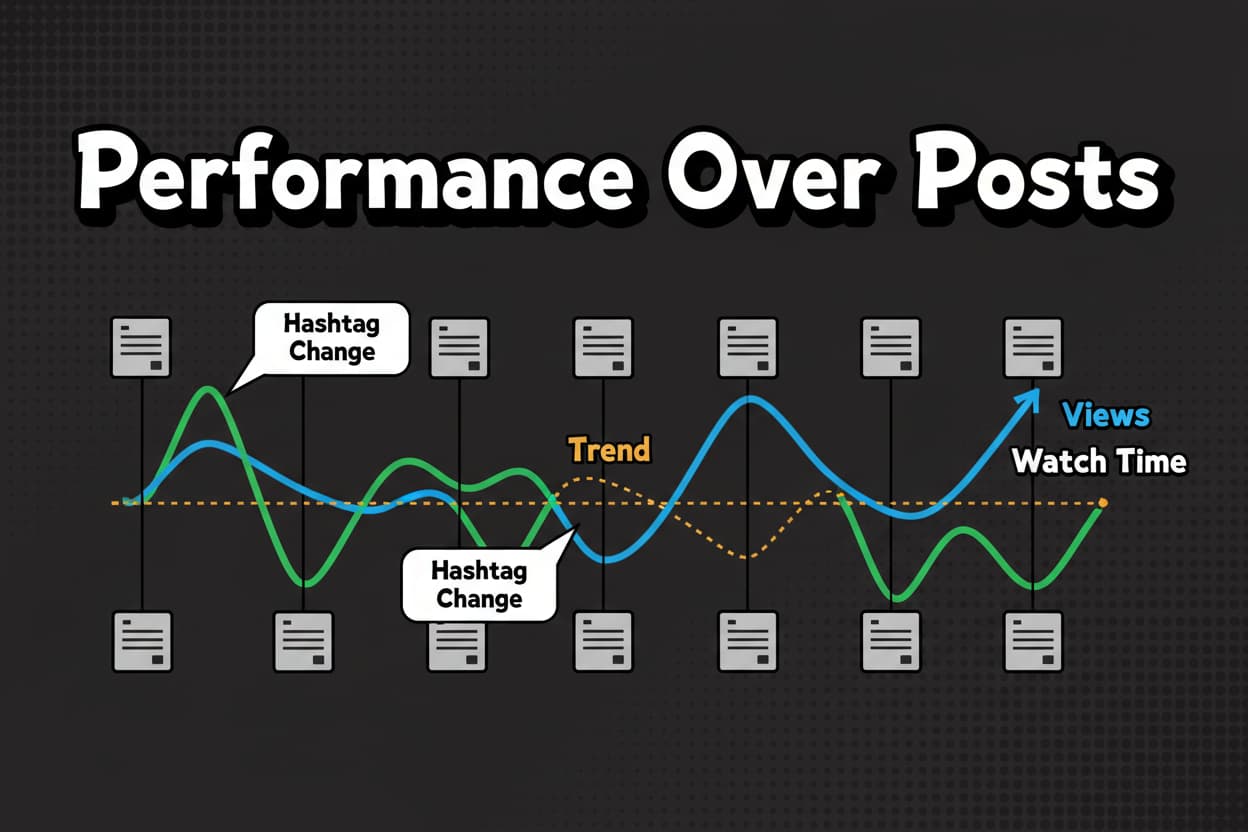
Results are estimates. Test over 3-5 posts for best signal. No official TikTok integration or endorsement implied.
Run your next analysis.
Frequently Asked Questions: TikTok Hashtag Analyzer and Hashtag Optimization
What is the best TikTok hashtag analyzer?
The best TikTok hashtag analyzer shows popularity, competition, relevance, and trend velocity, then recommends an optimal mix with alternatives and warnings you can copy in one click. It uses transparent scoring so you know why each tag made the cut.
How often should I update my hashtags?
Refresh your set weekly or whenever your topic changes. Retest the mix every 3 to 5 posts and keep the tags that consistently perform.
Can I use the analyzer for any niche?
Yes. Enter your topic and region. You’ll get broad, niche, and branded options whether you create in dance, education, beauty, gaming, small business, or something ultra-specific.
What makes a hashtag “trending”?
Trending refers to rising velocity. Usage and discovery are increasing compared to the baseline. Look for rising velocity with solid relevance and manageable competition.
How many hashtags should I use on TikTok?
Focus on quality over quantity. Many creators see strong results using 5 to 9 focused tags in a balanced mix: 1 to 2 broad, 3 to 5 niche, 1 to 2 branded.
Do hashtags matter more than posting time?
They play different roles. Hashtags help categorize the topic and match viewers based on interest, while posting time aligns with when your audience is active. Use both for best results.
Can a hashtag analyzer guarantee more views?
No tool can guarantee results. What it does is improve your odds by steering you to relevant, lower-competition, rising tags. Combine this with strong content, tight hooks, and steady testing.
Mini-case for consistency
A small business account shipped order-packing videos using generic tags like #fyp and #viral. Results were erratic. They switched to a balanced set anchored by #smallbusiness, #packorderswithme, #etsyshop, #handmadebusiness, plus a branded tag. Over the next six uploads, watch time stabilized and saves rose, even when views fluctuated. The mix didn’t magically spike every post, but it made performance more predictable and easier to improve.
No official TikTok integration or endorsement implied. Results are estimates and depend on content quality and audience fit.
{
"@context": "https://schema.org",
"@type": "FAQPage",
"mainEntity": [
{
"@type": "Question",
"name": "How often should I update my TikTok hashtags?",
"acceptedAnswer": {
"@type": "Answer",
"text": "Refresh your hashtag set weekly or whenever your topic changes. Trending and niche tags shift quickly, so retest the mix every 3–5 posts and keep top performers."
}
},
{
"@type": "Question",
"name": "Can I use the TikTok Hashtag Analyzer for any niche?",
"acceptedAnswer": {
"@type": "Answer",
"text": "Yes. Enter your topic and language or region. The analyzer surfaces broad, niche, and branded options for creators across categories like dance, education, beauty, small business, and more."
}
},
{
"@type": "Question",
"name": "What makes a TikTok hashtag trending?",
"acceptedAnswer": {
"@type": "Answer",
"text": "Trending hashtags show rising velocity: their usage and discovery are increasing compared to their baseline. Look for rising velocity with moderate competition and strong topic relevance."
}
},
{
"@type": "Question",
"name": "How is this TikTok hashtag tool different from others?",
"acceptedAnswer": {
"@type": "Answer",
"text": "It combines popularity, competition, relevance, and trend velocity, then recommends a ready-to-use mix with clear rationales, warnings for low-quality tags, and alternatives to test."
}
},
{
"@type": "Question",
"name": "How many hashtags should I use on TikTok?",
"acceptedAnswer": {
"@type": "Answer",
"text": "Prioritize relevance over quantity. Many creators see strong results using 5–9 focused tags in a balanced mix: 1–2 broad, 3–5 niche, and 1–2 branded."
}
},
{
"@type": "Question",
"name": "Do hashtags matter more than posting time on TikTok?",
"acceptedAnswer": {
"@type": "Answer",
"text": "They play different roles. Hashtags help categorize your content and match it to interested viewers, while posting time aligns with when your audience is active. Use both for best results."
}
},
{
"@type": "Question",
"name": "Can a hashtag analyzer guarantee more views?",
"acceptedAnswer": {
"@type": "Answer",
"text": "No tool can guarantee results. The analyzer improves your odds by helping you choose relevant, lower-competition, and rising tags. Combine this with strong content, hooks, and testing."
}
}
]
}
Take Your TikTok Growth to the Next Level: Start Analyzing Hashtags Now
Here’s the bottom line. A smart hashtag strategy gives your content the best shot at meeting the right viewers. Our tiktok hashtag analyzer turns that strategy into a quick, repeatable step in your workflow.
You get clear metrics, a recommended mix, and warnings for low-quality tags. You stay focused on making great videos while the tool handles the heavy lifting behind your TikTok hashtag analytics.
Use a simple loop. Analyze, choose, post, measure, iterate. Over a few cycles, you’ll see which tags consistently pull the right audience for your content.
- Analyze your topic with the tool
- Select 1-2 broad, 3-5 niche, 1-2 branded
- Post and keep your hook tight
- Measure views, watch time, saves, shares
- Iterate across 3-5 posts and refresh
Start analyzing now. Results are estimates. Test over 3-5 posts for best signal. No official TikTok integration or endorsement implied.
“Swapped two generic tags for niche ones the analyzer suggested and my saves doubled. Keeping this in my weekly flow.”
Privacy note: no login is required for basic results. Saving sets and exports may be gated by email. Your data stays focused on improving your tag mix and content relevance.
Key Takeaways
- Balanced beats random: 1-2 broad, 3-5 niche, 1-2 branded tags drive relevance and reach together.
- Let metrics guide you: prioritize Relevance and Velocity, manage Competition, and scan Popularity for scale.
- Track like a pro: views, watch time, CTR from For You, saves, and shares reveal the winners.
- Iterate in small batches: test mixes across 3-5 posts to spot real patterns.
- Use the tool for speed: shortlist 15-25, copy the recommended set, and ship with confidence.